Recipe
Pizza Dough Recipe (Simple, from Scratch)
Ad links. We may earn a commission on purchases, at no extra cost to you.
Homemade pizza dough comes together with just five ingredients: flour, water, yeast, salt, and a little olive oil. This version runs at about 62 percent hydration, a middle-of-the-road level that is easy to stretch by hand yet bakes up crisp on the bottom and chewy in the middle. You can have dough rising within 20 minutes and pizza on the table in about two hours. All values below are established starting points; rise and bake times vary with your kitchen temperature and how hot your oven actually runs.
How to use this recipe
Weigh your ingredients if you can, since a kitchen scale is far more accurate than measuring cups (one cup of all-purpose flour ranges from 120 to 140 g). Use bread flour for a chewier, more elastic crust or all-purpose for a softer bite. Warm water, around 100-110°F (38-43°C), wakes the yeast without killing it. For deeper flavor, mix the dough, then refrigerate it for 24-72 hours before baking and let it warm up before shaping.
Simple Pizza Dough
Ingredients
- 4 cups (500 g) bread flour or all-purpose flour
- 1 1/3 cups (310 g) warm water, about 100-110°F (38-43°C)
- 1 teaspoon (3 g) instant yeast (or 2 1/4 teaspoons for a faster rise)
- 2 teaspoons (10 g) fine salt
- 2 tablespoons (25 g) olive oil, plus more for the bowl
Instructions
- In a large bowl, whisk together the flour, instant yeast, and salt.
- Add the warm water and olive oil. Stir with a spoon or your hand until a shaggy dough forms with no dry flour left.
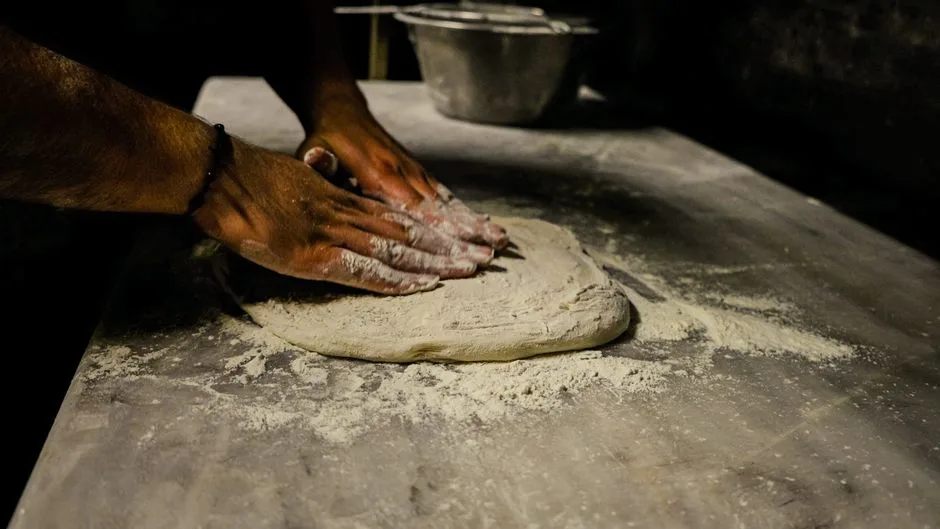
- Knead on a lightly floured surface for 8-10 minutes by hand (or 5-7 minutes in a stand mixer with the dough hook) until the dough is smooth, springy, and slightly tacky.
- Shape into a ball, place in a lightly oiled bowl, cover, and let rise at room temperature for 1-2 hours, until roughly doubled.
- Gently deflate, divide into two equal pieces, and shape each into a tight ball. Rest 10-15 minutes so the gluten relaxes.
- Stretch each ball into a 12-inch round, working from the center out and leaving a thicker rim. Avoid a rolling pin, which presses out the air.
- Top lightly, then bake on a preheated stone or steel as hot as your oven goes, 475-550°F (245-290°C), for 8-12 minutes until the crust is golden and blistered. If using chicken, sausage, or other raw meat, cook it to a safe internal temperature (chicken 165°F / 74°C).
By hand vs. stand mixer times
Tips for the best crust
| Step | By hand | Stand mixer |
|---|---|---|
| Combine ingredients | 3-4 min | 1-2 min on low |
| Knead to smooth and elastic | 8-10 min | 5-7 min on medium-low |
| Bulk rise (same for both) | 1-2 hours | 1-2 hours |
| Rest shaped balls | 10-15 min | 10-15 min |
| Total hands-on time | about 12-15 min | about 7-9 min |
- Preheat a pizza stone or steel for 45-60 minutes at your oven's maximum temperature; a hot baking surface is the single biggest upgrade for a crisp crust.
- Weigh the flour when possible. If using cups, spoon the flour in and level it off rather than scooping, which packs in too much.
- Let cold dough sit at room temperature for 30-60 minutes before stretching so it relaxes and stops springing back.
- Dust your peel with semolina or flour so the pie slides off cleanly, and assemble quickly to keep it from sticking.
- For more flavor, cold-ferment the dough in the fridge for 24-72 hours, then bring it to room temp before shaping.
- Go easy on toppings. Too much sauce or cheese steams the crust and makes it soggy.
FAQ
Can I use all-purpose flour instead of bread flour?
Yes. All-purpose works well and gives a slightly softer, more tender crust. Bread flour has more protein, which builds extra gluten for a chewier, sturdier crust that holds up to heavy toppings. Use the same amounts either way.
What is the best temperature to bake pizza?
As hot as your home oven will go, usually 475-550°F (245-290°C). High heat sets the crust fast and gives browning and bubbles before the inside dries out. A preheated stone or steel helps you reach and hold that heat. Times still vary by oven.
Can I make the dough ahead of time?
Absolutely. After mixing, cover and refrigerate for up to 3 days. Cold fermentation deepens the flavor. Let the dough warm at room temperature for 30-60 minutes before shaping, or it will fight you and tear.
Why won't my dough stretch?
The gluten is too tight, usually because the dough is cold or under-rested. Cover it and wait 10-15 minutes, then try again. Stretching it over your knuckles and letting gravity pull it down works better than forcing it flat.
Do I need a pizza stone or steel?
No, but they make a real difference. Without one, bake on an overturned, preheated baking sheet on the lowest rack. A steel or stone stores more heat and crisps the bottom faster.
Related guides